
Sep sees 94% jump in infra tendering; capital goods showing signs of stability.

While it gives clarity on one regulatory issue, the financial burden increases for the sector.
It's going to be another predictable quarter for banks. Slower credit growth, high interest rates and deteriorating asset quality will continue to haunt the sector, especially public sector banks.

First, TCS is on track to grow faster than the industry's estimated 11-14 per cent growth (in constant currency). The second quarter has seen no major shift in demand or project cancellations, which were big concerns.

This loan growth has been largely driven by the top 10 corporate groups.

There are some companies in the sector that have seen a decline in revenues but their performance is not sufficient to cause such a decline in industrial production data.

The earnings season this financial year is expected to start on an exciting note, as two information technology (IT) behemoths Infosys and Tata Consultancy Services (TCS) report their first quarter numbers on the same day. By now, TCS is expected to report a better set of numbers than Infosys.

A price war started by German car makers in China may eat into JLR margins and volumes.

Analysts say piecemeal bailouts won't work, serious cash infusion is needed.

Decision to hinge on Q3 GDP, Feb inflation data and supply-side reforms in the Budget

Stocks of fast moving consumer goods companies have been on a roll. From packaged food to personal care products, almost every category has been clocking robust growth over the last year.

Foreign investors highlight growing risk to the India story.

Revenues and earnings to improve for companies with low forex liabilities and no forward cover.

Weakness in LME prices of copper and aluminium to hurt company in second half.

Frigstad, who is in India to address Frost & Sullivan's global flagship event, GIL 2011: India, The Global Community on Growth, Innovation and Leadership, spoke about issues impacting companies today and why all is not as bad as it looks.

FIIs have a particular bias for the last five trading sessions in the quarter-ending months of March, June, September and December.

Foreign institutional investors (FIIs) have returned with a bang. Over the last seven trading sessions, they have pumped in close to $2 billion into Indian equities. Most market players expect this to continue as they see macro headwinds easing.

The first issue is inflation, which has been widely discussed. The government is now rightly working on reversing fiscal and monetary stimulus to manage the inflation pressure.

This makes stock-picking by retail investors difficult, but market experts say they need to understand that institutional players do not have a cookie-cutter approach to investing.
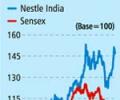
New variants and innovative product categories on the anvil to beat margin pressure.
